

 Let's Talk





On January 3rd, the U.S. military struck Venezuela and captured Nicolás Maduro. Within hours, Colombia deployed troops to its 2,219km border. President Petro suspended intelligence sharing with Washington. Regional allies condemned the action as a violation of international law.
And our global operation? Didn’t miss a beat.
No client escalations. No delivery disruptions. No emergency calls at 2am. Our Colombia teams – running customer success, recruitment ops, and back-office functions for US and Australian clients – maintained 100% uptime.
Most companies will get this wrong – and that’s the opportunity.
In the next 90 days, we’ll see a familiar pattern:
- Risk-averse execs freeze hiring in Colombia.
- Finance flags “geopolitical risk” in Q1 budget reviews.
- Headcount gets delayed or diverted elsewhere.
Smart operators will do the opposite.
- They’ll secure top talent while competitors stall.
- They’ll negotiate better lease terms while others hesitate.
- They’ll deepen partnerships with providers who are suddenly very motivated to prove value.
I’ve seen this play out after every regional disruption – elections, protests, even natural disasters. There’s always a 6-month window where the best people and pricing become available to those who can tell the difference between headlines and actual risk.
So let’s get clear on the difference.
The data nobody’s talking about: Colombia vs. Philippines on real-world risk
Everyone’s worried about theoretical instability in Colombia. Nobody’s asking about the real, recurring risks they’ve already normalized in the Philippines.
Here’s what we actually see across our own operations:
| Metric | Philippines | Colombia |
| Annualized retention rate | 62% | 78% |
| Typhoon-related disruptions (2024 YTD) | 4 events, avg 2.3 days impact | 0 |
| Internet downtime incidents | 2–3x/year | <1x/year |
| Time zone alignment with US | 12-hour offset | 0 hour offset |
| Real-time collaboration quality | Async-dependent | Seamless synchronous work |
To be clear: Our Manila team is world-class. This isn’t about ranking countries – it’s about matching functions to geography. The narrative that “offshore is safe, nearshore is risky” is not just outdated. It’s backwards.
The better question is: Which risks are you designed to absorb and which ones break your operating model?
A border event 1,000km from your Bogotá delivery center? That’s noise.
A typhoon that knocks out your Manila team during peak hours? That’s a missed SLA and a broken promise to your client.
Why Venezuela actually strengthens the Colombia nearshore thesis
Colombia has been managing Venezuelan instability for years. They’re already hosting 2.5 million Venezuelan refugees, the largest displacement in the region. They’ve continued to grow their BPO sector at 9% annually, even while absorbing pressure on their economy and infrastructure.
This isn’t new territory. It’s a muscle they’ve developed.
When the U.S. strike happened, Petro made a calculated move:
- Condemn the action diplomatically.
- Suspend intelligence sharing.
- Keep commercial operations fully intact.
That’s not anti-business. That’s a playbook move from a government that understands its global role. Even recently, Colombia’s diplomatic tensions with the U.S. have shown signs of thawing, with leaders from both countries signalling interest in renewed dialogue and high-level meetings despite past strains.
Compare that to how less mature markets respond under stress:
- Surprise tax policy shifts that hit foreign operators
- Currency swings that make payroll unpredictable
- Infrastructure degradation that stalls digital delivery
Colombia isn’t making those mistakes. Because they can’t afford to. Their nearshore value proposition depends on staying stable, especially when their neighbors aren’t.
The portfolio model: Use both, not either/or
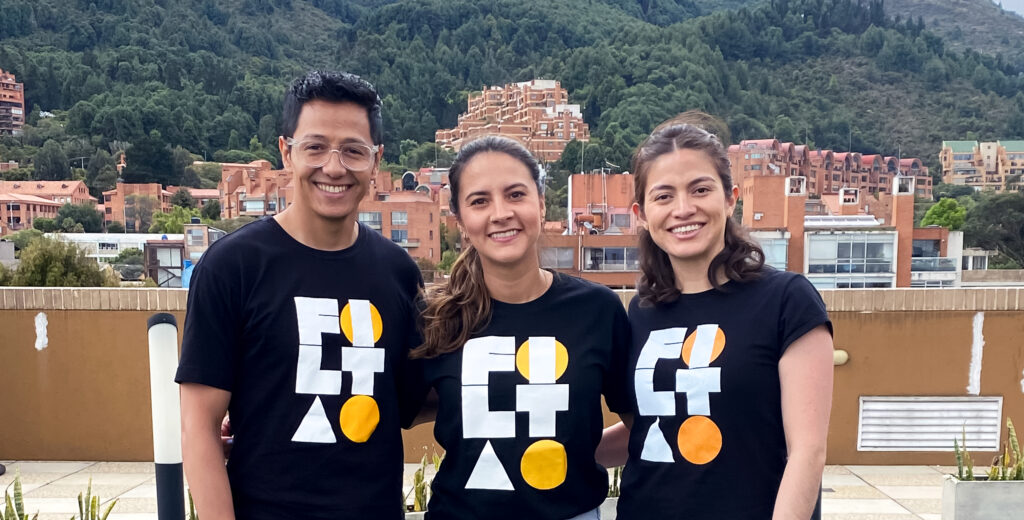
We’re not replacing the Philippines with Colombia. We’re using each for what it does best.
Here’s how we structure it at Filta:
Philippines:
- High-volume, transactional work
- Back-office processing with structured SOPs
- Roles where a 12-hour offset gives us 24/7 follow-the-sun coverage
- Teams comfortable working asynchronously
Colombia:
- Customer success roles that require real-time client touchpoints
- Recruitment operations where speed and collaboration matter
- Functions that benefit from cultural alignment with U.S. buyers
- Talent that can flex across English and Spanish
Outcome:
- We cut Member Acquisition Cost by 35%
- We raised client retention above industry benchmarks
- We have true geographic redundancy – not a theory, a working system
When Manila pauses for a storm or a holiday, Bogotá steps in. When Colombia slows for a regional issue, Manila keeps humming. When a client calls Saturday morning, someone in a compatible time zone picks up. That’s not a backup. That’s a resilient operating model.
What this means for your 2026 global team strategy
If you’re 100% offshore today:
- You’re overexposed. Not because the Philippines is failing but because concentration multiplies risk. Add nearshore as a capability, not just a contingency.
If you’re considering Colombia but hesitated this week:
- You’re reacting to headlines, not data. Your competitors are calling their Colombia partners to scale up. The talent you want is on the market right now.
If you’re already diversified:
- Time to optimize. Are you leveraging each market for its real advantages – or just spreading headcount for optics?
The goal isn’t to eliminate risk. It’s to know which risks you’re built to withstand and which ones will break your SLA, your cost model, or your team’s trust.
The contrarian move we’re making now
We’re aiming to open 100 new roles in Bogota and Medellín this quarter. Not in spite of Venezuela. Because of it.
Here’s why:
- Colombia has every incentive to prove its reliability. The government knows global buyers are watching and they’re going to do everything they can to show this is still a safe, stable market for business.
- Talent just became more accessible. Some companies froze hiring this week. That means we’re getting first access to top candidates who wouldn’t have been available last quarter.
- Pricing just got more flexible. Office space, connectivity, vendor relationships – all suddenly open for negotiation.
- The client conversation got easier. When I say “we’re in both Colombia and the Philippines,” the risk narrative changes. We’re not talking about diversification as a concept. We’re living it as an operating reality.
What I’m not doing:
- Ignoring the regional complexity
- Pretending Colombia is risk-free
- Suggesting you ditch your offshore strategy
The bottom line
The U.S. strike in Venezuela was a geopolitical event. It wasn’t an operational event – for us, or for Colombia’s BPO sector. Most execs will conflate the two. A few will see the difference. Those few will build more resilient global operations- not in spite of instability, but because they know how to navigate it. We’re betting on being in that group.
Here’s to leading better, one insight at a time.
Join Outsourcing Un-Filta’d – The Global Growth Newsletter by Filta Co-Founder & Chief Growth Officer, Nerissa Chaux.
Be the first to access exclusive global hiring intel and cultural insights built for leaders growing global teams.
Sign up here: https://bit.ly/TheGlobalGrowthNewsletter
Explore more of these insights at filtaglobal.com
Connect to Nerissa Chaux via LinkedIn!







 +61 (07) 2146 2211