
 Let's Talk






Hiring a graphic designer in Chicago takes 10 to 14 weeks from job posting to start date.
That is the reality. The global average time-to-fill sits at 44 days, according to SHRM benchmarks. But for creative roles in competitive markets like Chicago, that number stretches well past 70 days. And that timeline costs more than most agencies realize.
Some Chicago agencies are now hiring designers in 3 to 5 weeks at a fraction of that cost — without lowering their standards.
Here is what is really slowing down local hiring, what it actually costs you, and how the faster alternative works.
The Local Hiring Timeline: What Actually Happens
Weeks 1 to 2: Job posting and waiting
You write the job description, post it on LinkedIn and Indeed, and wait. According to 2025 hiring speed research, top candidates are off the market in as little as 10 days. By the time you have gathered enough applications to review, the best people have already accepted offers elsewhere.
Weeks 3 to 5: Portfolio review and screening
Proper portfolio evaluation for agency-ready design talent is not a five-minute scroll through Behance. You are assessing business-relevant work, process transparency, and collaboration evidence — across multiple candidates. That takes real time.
Weeks 6 to 8: Interviews and skills assessment
According to Ashby’s 2025 Talent Trends Report, teams interviewed 40% more candidates per hire in 2024 compared to prior years, a reflection of the industry’s renewed focus on quality of hire over speed. For creative roles, coordinating multiple interview rounds with candidates who are currently employed elsewhere adds 5 to 7 days per round.
Weeks 9 to 10+: Offer, negotiation, and notice period
You make an offer. They counter. You negotiate. They accept — then give two weeks’ notice to their current employer, sometimes longer for senior roles or mid-project situations.
The result: 10 to 14 weeks from job posting to a designer who is actually working for you.
And according to Mitratech’s 2025 time-to-fill analysis, this is not improving. Senior roles now see nearly 40% of organizations taking more than 90 days to fill. Mid-level roles are not far behind, with 17% exceeding 90 days.
The Real Cost of a 10-Week Hiring Cycle
The slow timeline is not just an inconvenience. It has a price.
Direct costs per hire:
Recruitment agency fee at 20 to 25% of a $67,790 Chicago designer salary: $13,558 to $16,948
Job board postings: $300 to $500 per month
Internal time on screening and interviews (25 to 30 hours at $100/hour): $2,500 to $3,000
Total direct cost: $16,358 to $20,448 per hire
Opportunity costs:
SHRM research estimates every open position costs organizations between $4,000 and $9,000 per month in lost productivity, overtime, and project delays. Over a 10-week hiring cycle, that adds $10,000 to $22,500 in hidden costs.
Total cost per hire: approximately $26,000 to $43,000
And this is before you account for the client work that slips, the deadlines your existing team absorbs, or the freelancer rush fees you pay to plug the gap.
Why the Timeline Is Getting Longer, Not Shorter
The 2025 State of Hiring research from The Interview Guys synthesizes data across 25+ sources and finds that 60% of companies reported an increase in time-to-hire in 2024, with the trend continuing into 2025. Only 6% of employers were able to reduce their time-to-hire. No industry successfully improved its hiring speed across the board.
The reasons are structural:
More thorough vetting. After the “hire at all costs” mentality of 2021, as Ashby’s data confirms, teams are now more deliberate, reviewing more candidates per hire and running more interview rounds before making offers.
Scheduling friction. Getting employed candidates through multiple interview rounds across weeks of calendar coordination is slow by design.
Notice periods. These have not shortened. Two weeks is still the norm, and senior designers often need more.
These are not process problems you can optimize away. They are structural features of local hiring.
What 3 Designer Hires Actually Cost: Side by Side
Traditional local hiring (Chicago):
- Timeline: 10 to 14 weeks per hire
- Recruitment costs: $40,674 to $50,844 (3 x $13,558 to $16,948)
- Lost productivity at $6,000/month average: $60,000 to $84,000 (10 to 14 weeks)
- Total all-in cost: $100,674 to $134,844
Structured offshore hiring (Philippines or Colombia):
- Timeline: 3 to 5 weeks per hire
- Recruitment costs: $1,797 (3 x $599 flat fee through Filta)
- Lost productivity: $18,000 to $30,000 (3 to 5 weeks)
- Total all-in cost: $19,797 to $31,797
Savings: $70,000 to $103,000 (69 to 77% reduction) Time saved: 5 to 9 weeks
How Agencies Are Cutting This to 3 to 5 Weeks
The speed advantage of offshore hiring comes from a structural difference, not a quality trade-off.
Local hiring starts from zero: job board posting, waiting for applications, screening cold portfolios. Offshore providers maintain active, pre-vetted talent pools. When you need someone, they are drawing from designers already assessed for technical skills, English proficiency, and agency-relevant experience, not waiting for the first resume to land.
There are also no notice periods. Designers hired through an EOR structure can start within days of acceptance. No waiting for their current employer’s two-week clock to run out.
Here is how the timeline actually compresses:
Week 1: Role clarity and sourcing The most important step most agencies skip with local hiring is defining success before sourcing. What does good look like at 30, 60, and 90 days? What problem is this role solving? Getting this right upfront is what cuts mismatched hires and early attrition. With clear role definition, sourcing begins immediately against an existing talent pool.
Weeks 2 to 3: Shortlist and interviews Pre-screened candidates move through portfolio review and two focused interview rounds in 7 to 10 days rather than the 21 to 28 days a cold local search requires. No competing with five other agencies for the same five local candidates.
Weeks 4 to 5: Hire and onboard Offer accepted. EOR handles employment contracts, payroll, benefits, and compliance. Cultural onboarding begins on day one: brand guidelines, communication norms, tool stack, feedback expectations. The designer is contributing inside the first week.
Based on Filta’s placement data, designers onboarded through a structured 4-week cultural integration framework reach full productivity significantly faster than those dropped into a role without context. The process investment at the front end pays back quickly.
The Compliance Piece That Catches Agencies Off Guard
Speed creates temptation to cut corners. The most common one: hiring offshore designers as contractors rather than employees to move faster.
If you control the hours, set the workflow, and direct the output, local labor law in both the Philippines and Colombia treats that as employment, regardless of what your contract says. Misclassification creates real exposure: back taxes, labor penalties, and IP ownership gaps you will not discover until it is expensive to fix.
The right structure is an Employer of Record (EOR) model. The EOR employs your designer under local law, handles payroll, benefits, and compliance, and ensures work product belongs to your agency. High-performing designers also know the difference between proper employment and a contractor arrangement that leaves them unprotected. When the structure is unclear, engagement drops and the best people start looking elsewhere.
Speed and compliance are not in tension when the structure is right from day one.
The Bottom Line
The 10 to 14 week local hiring timeline is not going away. It is built into how recruitment works: job boards, notice periods, negotiation cycles, calendar friction across employed candidates. These are structural features, not fixable inefficiencies.
What Chicago agencies are changing is not the local hiring process, it is whether local hiring is the only option for every design role.
Offshore hiring through a structured provider does not compress the timeline by cutting corners on quality. It removes the delays that are specific to local hiring: the waiting for applications, the cold portfolio screening, the notice periods, the competing offers from other agencies chasing the same small pool.
The result is designers who start in 3 to 5 weeks, at a fraction of the all-in cost, with the compliance structure in place to protect your agency.
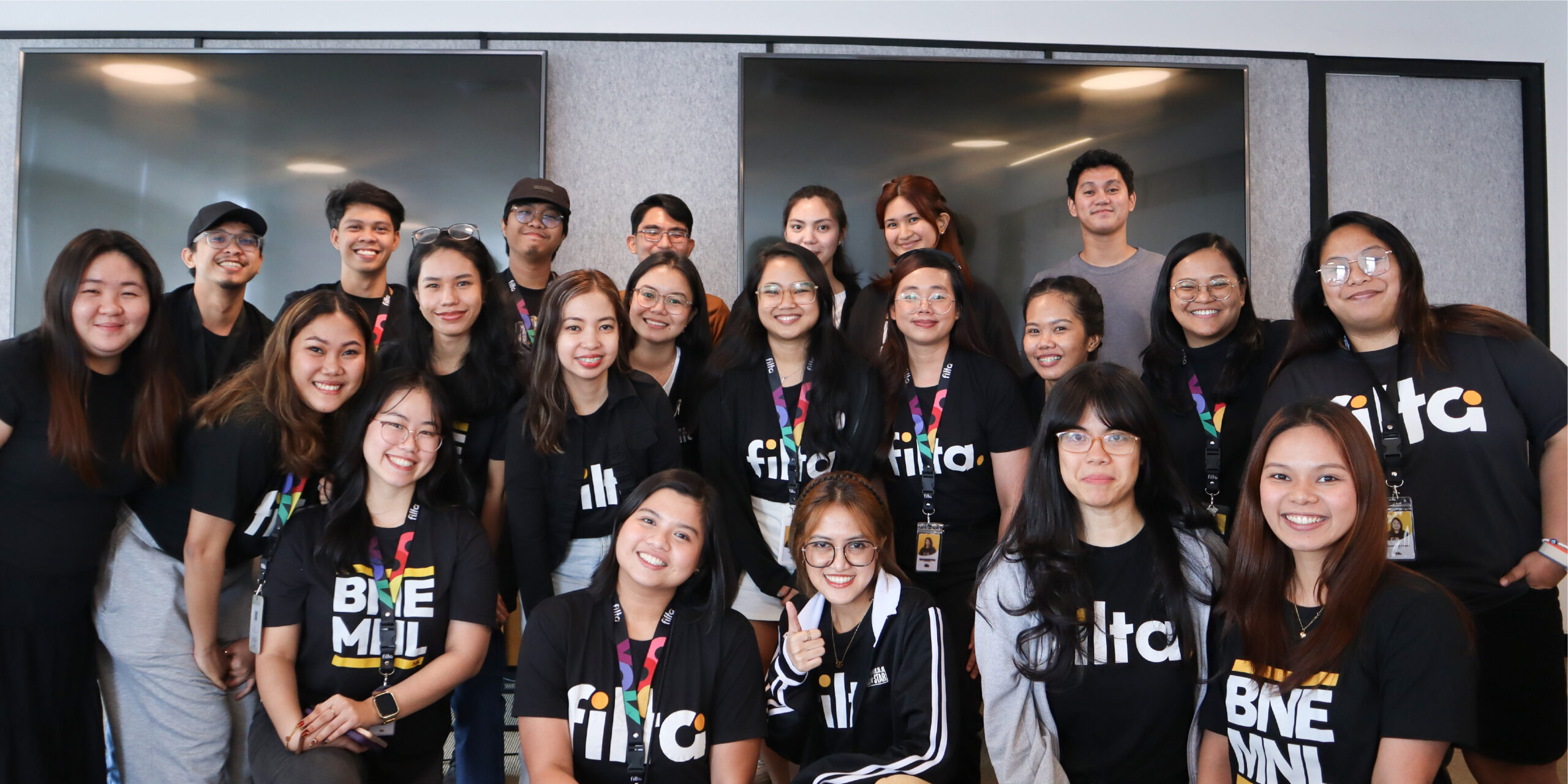
Filta is ranked in the top 9% of outsourcing providers globally. We help Chicago agencies build high-performing distributed design teams in the Philippines and Colombia, handling talent acquisition, EOR compliance, equipment, cultural integration, and ongoing support under one roof.
Book a free strategy session → We will show you exactly how to hire graphic designers in 3 to 5 weeks with the same quality you would expect from a 10-week local search. Clear timeline, clear costs, no pitch.







 +61 (07) 45180033


