 hello@filtaglobal.com

 Let's Talk



Chicago is America’s third-largest television market. It runs major network affiliates, public broadcasting stations, sports networks, and some of the country’s most active radio operations. The infrastructure behind all of it is complex, technical, and constantly evolving.
And right now, the people who keep that infrastructure running are genuinely hard to find and expensive to keep.
This is not a Chicago-specific problem. But for media operations in a city where budgets are tightening and headcount decisions are under scrutiny, the IT and technical staffing gap is a real constraint on what teams can do and how fast they can move.
What Is Actually Happening in Chicago Media Right Now
The Chicago media landscape has been going through significant change. Axios reported that local broadcasters including WBEZ and WTTW both cut back programming in 2024. Six Illinois newspapers closed in the last 18 months. Budget pressure is real and widespread.
At the same time, the technical demands on these operations are not shrinking. They are growing. The shift to streaming, digital-first production workflows, NEXTGEN TV infrastructure, and cloud-based broadcast systems all require IT and technical staff who understand both traditional broadcast technology and modern digital systems.
Nexstar launched NEXTGEN TV across five Chicago stations in February 2024, bringing ATSC 3.0 broadcast standards to the market. That kind of infrastructure upgrade does not run itself. It needs technical people to set it up, maintain it, and troubleshoot it.
The gap is this: broadcasting operations need more technical coverage, not less. But the budget environment makes adding full-time local IT hires a difficult conversation.
Why Overhiring Locally Is Not the Answer
Hiring a full-time IT specialist in Chicago is not cheap. Between salary, benefits, payroll taxes, and the soft costs of recruiting and onboarding, a mid-level broadcast IT role in a major US market can easily run well over $80,000 to $100,000 annually before overhead.
For an operation already managing tight margins, that is a significant commitment for a role that may need to flex with production demands rather than stay flat year-round.
The broader media industry reflects this tension. Challenger, Gray and Christmas reported that the media industry announced over 16,000 job cuts in the first ten months of 2025, up 26% from the same period in 2024, with restructuring and consolidation cited as the primary drivers. Media companies are not expanding local headcount. They are figuring out how to do more with fewer local hires.
The question then becomes: how do you fill a technical gap without adding a full-time local position?
What Remote IT and Technical Roles Actually Look Like in Broadcasting
Before going further, it is worth being specific about which IT and technical roles translate well to a remote model in a broadcasting context.
Not every role does. An engineer who physically operates broadcast equipment in a control room needs to be in the room. But a significant portion of technical work in modern media operations is already system-based and remote-capable.
Roles that work well remotely for broadcasting and media teams include:
- Broadcast systems administrators who manage servers, storage systems, and cloud infrastructure that power production and delivery workflows. The vast majority of this work happens through remote access tools regardless of where the person is physically located.
- IT helpdesk and technical support for internal staff, equipment, and software systems. Response time is the key metric here, not physical proximity.
- Network monitoring and maintenance for the connectivity that broadcasting operations depend on. This is inherently a remote function.
- Digital asset management support for the libraries, metadata systems, and archiving workflows that media operations run at scale.
- CMS and platform administrators who keep digital publishing, streaming, and content delivery systems running properly.
These are roles where a qualified person working from a well-equipped home office or a professional facility in a different country can do the job just as effectively as someone sitting in a Chicago office building.
Why the Philippines Specifically
When US media teams explore remote IT staffing, the Philippines comes up consistently, and for concrete reasons.
English proficiency is the baseline requirement for any technical role that involves internal communication, documentation, and collaboration with US-based colleagues. The Philippines ranked 28th out of 123 countries in the 2025 EF English Proficiency Index, rated “high proficiency” by Education First, and second in Asia only to Malaysia. For a role that requires daily communication with a Chicago-based team, that matters.
The technical talent pool is substantial. The Philippines’ IT and business process management industry employed over 1.9 million professionals in 2024 and generated over $29 billion in annual revenue, reflecting a workforce that has been building technical skills for decades with significant government and private sector investment behind it.
On cost, the numbers are significant. Hiring IT professionals in the Philippines typically carries savings of 50 to 70% compared to equivalent US roles, without the quality trade-offs that the cost difference might suggest. For a Chicago broadcasting operation managing a tight budget, that gap creates real operational room.
The timezone consideration is different from Colombia. The Philippines operates on Philippine Standard Time, which is roughly 12 to 13 hours ahead of Chicago. That works best for teams that can structure handoffs and use overnight coverage as a production advantage. For IT monitoring and helpdesk roles specifically, that time difference can mean your technical systems are actively monitored while your Chicago team is offline. Some operations treat that as a feature rather than a limitation.
How This Actually Works in Practice
The remote IT staffing model for broadcasting is not about replacing your on-site technical team. It is about extending your coverage and capability without adding to your local headcount.
A realistic structure for a Chicago media operation might look like this: your on-site staff handles physical infrastructure and anything that requires in-person presence. A Philippines-based IT specialist handles systems administration, monitoring, helpdesk tickets, and digital platform support. They are embedded in your internal tools, your communication channels, and your documentation systems. They report to the same manager. They attend the same standups.
The relationship works because the scope is defined. Remote IT does not mean disconnected IT.
How Filta Helps
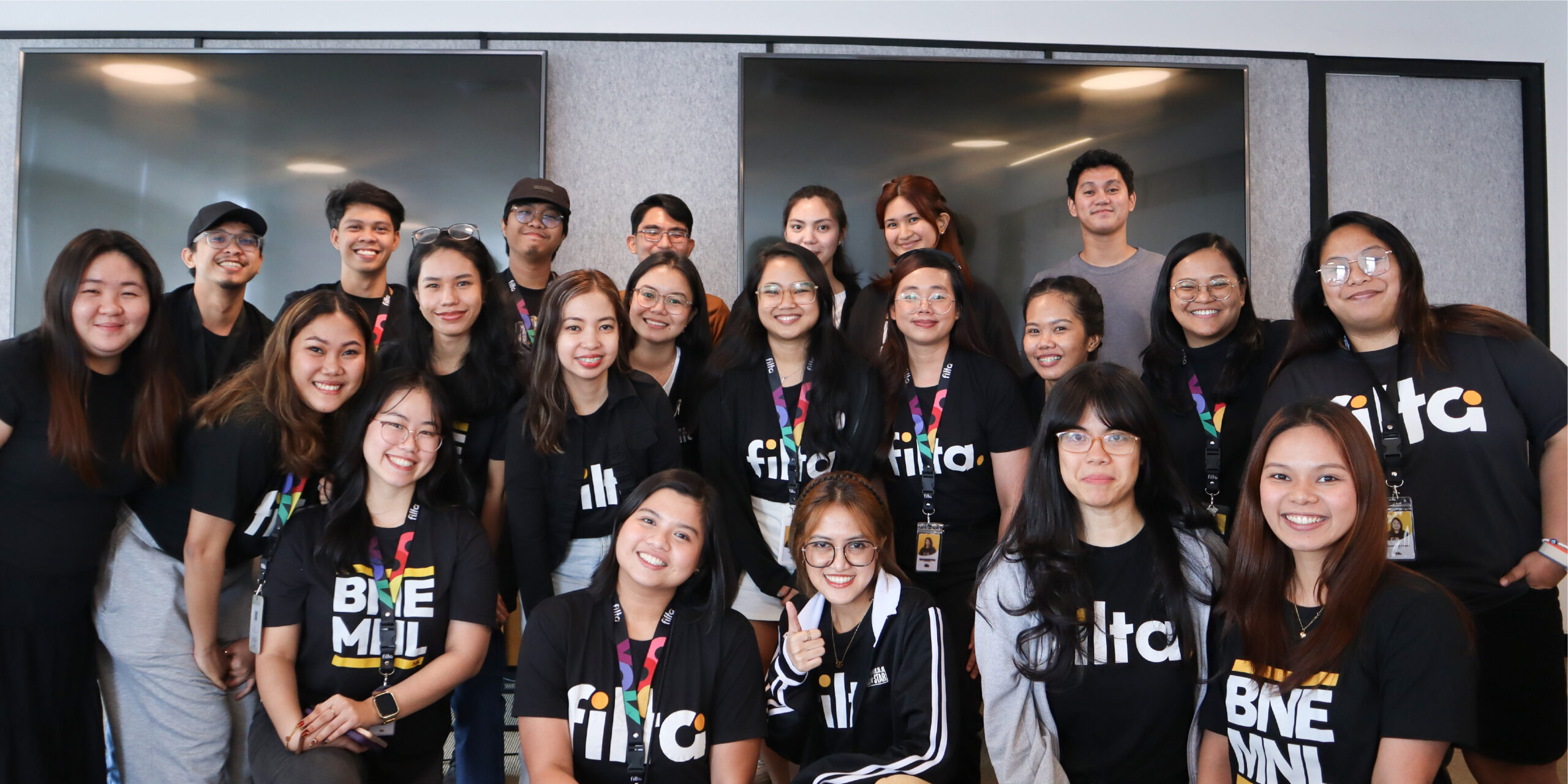
Filta places dedicated full-time IT and technical staff in the Philippines for US-based media and broadcasting operations.
The way Filta structures it: your IT hire is not a contractor rotating across multiple clients, and they are not drawn from a shared service pool. They are a dedicated team member working for you, using your tools and systems, within a workflow that you define. Filta handles talent sourcing and vetting, employment compliance through their Employer of Record (EOR) service, equipment, and ongoing HR support.
For a Chicago broadcasting operation that needs to extend its technical capacity without adding another full local salary, this is a practical path. You define the role, you manage the work, and Filta handles the infrastructure of the employment itself in-country.
The result is a qualified IT or technical team member in place in weeks, not the months that a local search and hire process typically takes, and at a cost structure that makes the addition viable even in a tight budget environment.
The Broader Point
Chicago’s broadcasting and media market is active, competitive, and technically demanding. The operations that run well are not necessarily the ones with the biggest local headcount. They are the ones that have figured out which work needs to be done on-site and which work can be done by someone qualified and dedicated, wherever they happen to be.
For IT and technical support roles in media, the answer is increasingly: the location does not matter as much as the skill set and the structure around the hire.
That is what more operations are figuring out right now. Not as a cost-cutting shortcut, but as a legitimate way to build technical coverage they could not otherwise afford.
Frequently Asked Questions (FAQs)
- What IT roles in broadcasting can realistically be done remotely?
Systems administration, IT helpdesk support, network monitoring, digital asset management, CMS and platform administration, and cloud infrastructure management all translate well to remote delivery. Roles that require physical access to in-room broadcast equipment are better suited for on-site staff. - Does a Philippines-based IT hire require extensive oversight?
Not if the role is clearly scoped and the hire is properly vetted. Experienced IT professionals working remotely are accustomed to managing their own workflows, documenting work, and communicating asynchronously or in scheduled syncs with their US-based team. - How does the timezone difference with the Philippines affect IT support coverage?
The 12 to 13-hour difference with Chicago means a Philippines-based IT hire works while your local team is offline. For monitoring and helpdesk roles, this creates natural overnight coverage. For roles requiring daily collaboration, structured handoffs and overlap windows during morning hours on one side and evening hours on the other can make it work effectively. - Is offshore IT staffing only for large broadcasting operations?
No. Smaller and mid-size operations often benefit most because the cost savings are proportionally more impactful when budgets are tighter. A single qualified IT hire through an offshore model can provide coverage that a smaller operation could not justify at local market rates. - What is the difference between hiring a contractor and using a staffing partner for IT roles?
A contractor arrangement is informal and often carries compliance risk. A staffing partner using an EOR structure means your Philippines-based hire is formally employed, with proper contracts, benefits, and legal protections in place. This protects both the hire and your operation. - How quickly can a remote IT hire be in place?
With a staffing partner that has an existing talent pipeline in the Philippines, the process from defining the role to having a vetted candidate ready to start typically takes three to five weeks.
Filta is ranked in the top 9% of outsourcing providers globally. We help Chicago-based broadcasting and media operations build reliable offshore technical teams in the Philippines, handling talent sourcing, Employer of Record (EOR) compliance, equipment, and ongoing support under one roof.
Book a free strategy session → We will show you exactly how to hire expert IT and technical support in 3 to 5 weeks with the same quality you would expect from a 10-week local search.






 +61 (07) 45180033


