

 Let's Talk





When OpenAI released its new GDPval report, it did more than measure AI’s progress. It gave leaders a reality check about how fast the nature of work is evolving.
The report evaluated AI performance across 44 professions, from software development and law to design and customer service. The results showed that models like GPT-5 and Claude Opus 4.1 are now performing at near-expert levels on many real-world tasks.
According to OpenAI, here are examples of work tasks ChatGPT and similar models can already replace or assist with:
✓ Building competitor analyses for logistics and delivery businesses
✓ Designing sales brochures, visuals, and marketing materials
✓ Assessing medical images such as skin lesions
✓ Drafting legal summaries and compliance reports
✓ Conducting financial risk assessments and projections
✓ Managing customer service responses and documentation
✓ Writing technical manuals, onboarding materials, and reports
This list cuts across industries, skill levels, and departments. But instead of asking whether AI will replace people, the smarter question is how fast leaders can redesign their workflows to keep up.
Why Most Businesses Are Struggling with AI
Many companies either overestimate what AI can do or underestimate how to use it effectively. The truth is that AI is not a silver bullet or a threat. It is a tool that magnifies what already exists.
Strong systems become stronger. Weak systems collapse faster.
One logistics company in the United States understood this early. They used AI to pre-analyze shipment data, then had their team in the Philippines validate and interpret the results before sending reports to clients. The process became twice as fast, more accurate, and more valuable for customers.
That success was not about replacing people. It was about redesigning how they worked together.
How to Build a Smarter, AI-Enabled Team
Let’s skip the hype and get practical. Here’s how business leaders can act on what OpenAI just confirmed.
1. Map your workflows to AI opportunities
Start by auditing which parts of your business are task-heavy and repetitive like data entry, reporting, documentation, analysis prep, templated content creation. These are prime areas for AI augmentation.
→ A U.S. logistics firm used AI to pre-analyze shipment data, while its offshore team in the Philippines validated anomalies and handled exceptions. The result? 50% faster turnaround with no drop in accuracy.
→ The lesson: Don’t replace people. Redesign the process so humans supervise and improve what AI produces.
2. Build “AI-ready” operating models
If you’re managing offshore teams in the Philippines or Colombia, now is the time to upgrade them into AI-enabled delivery hubs.
- AI for initial data sorting, humans for insight.
- AI for drafting client comms, humans for tone and accuracy.
- AI for workflow automation, humans for governance and compliance.
This combination keeps your costs efficient while improving response times and quality control.
3. Invest in upskilling and governance
AI fluency is the new literacy. Train your teams not just to use AI but to manage it by checking for bias, hallucinations, and context misses.
Set up clear “human-in-the-loop” protocols:
- Who verifies outputs?
- When should tasks escalate to humans?
- How is data stored and monitored?
Without governance, you’re just scaling risk.
4. Pilot before scaling
Run small, measurable AI pilots. Choose one task, automate 30–50% of it, and track time saved, accuracy, and ROI.
If it works, scale it. If it doesn’t, you’ve learned cheaply.
5. Create an AI Playbook
Don’t let every department experiment in isolation. Develop a unified AI Playbook that defines tools, vendors, ethics, data privacy, and success metrics. This keeps innovation aligned and compliant.
The Future of Work Belongs to Those Who Redesign It
AI is not taking over people’s jobs. It is changing what good work looks like. It is pushing leaders to think more critically about how teams collaborate, how tasks are assigned, and how time is spent.
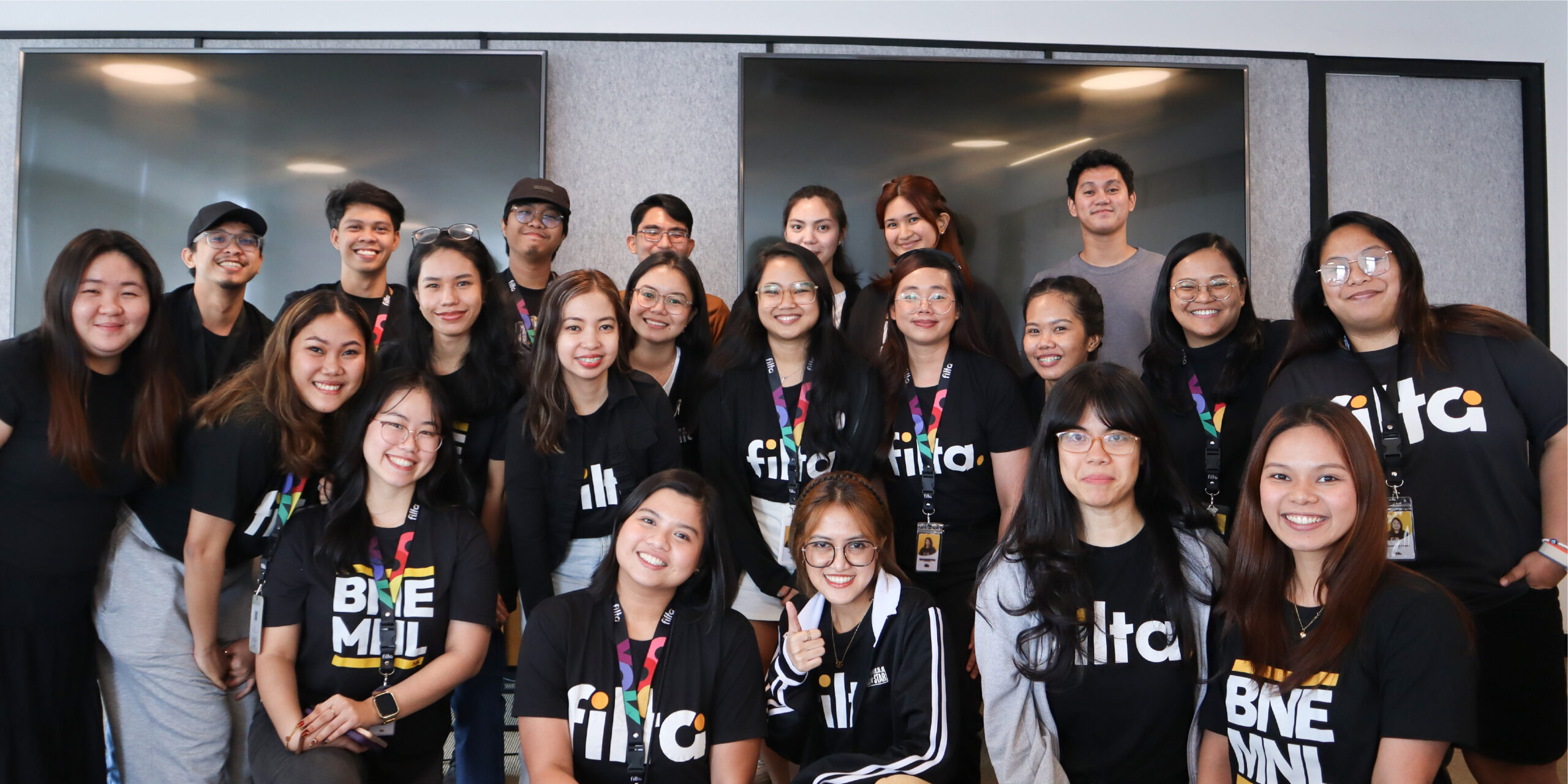
At Filta, we support companies building AI-ready global teams that integrate automation without losing human expertise. Our teams in the Philippines and Colombia are trained to manage AI tools responsibly, deliver consistent results, and maintain high standards of quality and compliance.
Because the future of work will not reward those who resist change. It will reward those who learn how to work smarter, faster, and together.
Remember: AI will not decide the future of your business. Leadership will. The companies that grow from here will be the ones that embrace technology as a partner, not a threat, and redesign their systems to help people and machines do their best work together.
If you want to learn how to better manage your global teams, improve productivity, and use AI as a real advantage, then book a free consultation with Filta and let’s chat.
To explore more resources, the latest insights, and on-the-ground updates about global remote teams, visit filtaglobal.com







 +61 (07) 2146 2211