
 Let's Talk






A bad job brief is the most expensive mistake in offshore hiring. Not a bad interview. Not a slow onboarding. The brief.
It is the first thing a candidate in the Philippines reads about your agency. It shapes who applies, what they expect, and how they show up on day one. A vague brief attracts a wide, mostly wrong pool of candidates and sets up a working relationship built on misaligned assumptions.
Jacksonville’s agency scene is competitive and growing fast. The city’s advertising market is rapidly expanding, with high demand for creative and flexible marketing solutions. Agencies here are lean, client-driven, and moving quickly. The last thing you need is to spend three weeks interviewing candidates in Manila only to realize none of them understood what the role actually required.
Here is how to write a brief that gets it right from the start.
Why Most Job Briefs Fail
Most job briefs written for offshore roles are recycled local job descriptions. They list responsibilities in broad strokes, name a few tools, and end with something like “must be a team player with strong communication skills.”
That brief was probably fine for a local hire who could ask follow-up questions in an interview, shadow a colleague, or absorb context by sitting in the office for a week. For a remote hire in the Philippines who will be working independently from day one, it creates a gap between what you expected and what you get.
Filipino professionals are accustomed to detailed briefs and perform best when expectations are explicit from the start. That is not a cultural limitation. It is a professional standard that works in your favor when you meet it properly.
The brief is not just a sourcing tool. It is a contract of expectations. Get it right and you attract the right person, set the right context, and reduce the back-and-forth that slows down the first 90 days.
The Six Things Every Brief Needs to Nail
1. A specific, accurate role title
Do not write “Marketing Specialist.” Write “Paid Social Media Specialist” or “SEO Content Writer” or “Google Ads Campaign Manager.” A specific title signals to the candidate exactly what lane this role sits in and helps your staffing partner or sourcing process filter out the wrong profiles before they reach you.
If the role spans multiple functions, name the primary one and list the secondary ones as supporting responsibilities. Do not try to compress two roles into one title.
2. The actual deliverables, not the responsibilities
There is a difference between a responsibility and a deliverable. “Manage social media accounts” is a responsibility. “Publish five posts per week across Instagram and Facebook, respond to comments within four hours, and deliver a monthly performance report” is a deliverable.
Deliverables give the candidate a clear picture of what success looks like. They also give you a benchmark for performance conversations later. Write them as outcomes, not activities.
3. The tools they will use from day one
List every platform, software, and communication tool the hire will need to operate in. For a Jacksonville digital marketing agency, that might include Google Ads, Meta Business Suite, HubSpot, Asana, Slack, and Google Analytics. Do not assume.
According to Wise’s 2026 guide to hiring in the Philippines, many Filipino professionals are already experienced in remote work, international business practices, and the communication standards global companies expect. But they need to know which specific stack they are walking into. A candidate who is strong in Asana but has never used Monday.com needs to know that upfront so they can self-assess honestly.
4. Working hours and timezone expectations
This is the section most agencies skip or write vaguely. Do not. The Philippines operates on Philippine Standard Time, which is 12 to 13 hours ahead of Jacksonville’s Eastern Time. That means your hire is essentially working overnight relative to your team.
Be explicit. Do you need overlap hours? If so, which ones and for how long? Is there a weekly call they need to join at a specific time? Are async handoffs acceptable for most of the work? The candidate needs to know whether this role requires them to adjust their working schedule and by how much. Surprises on either side of that conversation lead to attrition.
5. Experience level and evidence, not years
“Three to five years of experience” tells you very little. “Has independently managed monthly ad spend of $20,000 or more across Google and Meta” tells you a great deal.
Write your experience requirements as evidence statements. What should they have done, at what scale, and with what kind of outcome? Ask for portfolio links, case studies, or campaign data where applicable. Filipino professionals at the mid-to-senior level have built strong professional track records. Give them the opportunity to show it in a way that is actually meaningful.
6. Compensation range
Include it. The Philippines has a vast talent pool ready for immediate deployment, but successful hiring requires clear compensation planning. A brief without a salary range forces candidates to guess whether the role is financially viable for them, which wastes everyone’s time.
Refer to Filta’s 2026 Salary Guide for current market rates across roles in the Philippines. These figures come from actual 2026 placements, not survey averages, and give you a credible starting point for setting a range that is competitive without being uninformed.
What to Add for a Remote-Specific Context
Beyond the six core elements, a brief written for a remote hire in the Philippines needs a few additional pieces that a local job description simply does not require.
- Your team structure. How many people will this hire work with? Who do they report to? Is the team fully remote or is there a local office component? Filipino professionals thrive in clearly defined team contexts. Paint the picture.
- How you communicate. Do you run daily standups or weekly syncs? Is Slack your primary tool or email? Are decisions made quickly or through a longer review process? This sets expectations for pace and communication style before the hire even starts.
- What good looks like in 90 days. Define what a successful first three months looks like in concrete terms. This serves two purposes: it gives the candidate a target, and it forces you to articulate what you are actually hiring for. If you cannot describe success at 90 days, your brief is not finished.
The Brief Is Also a Filter
A well-written brief does something that is easy to overlook. It filters out the wrong candidates before you spend time on them.
A candidate who reads a detailed, specific brief and still applies with a generic cover letter and a resume that does not address the specifics is showing you something important about how they approach their work. A candidate who reads the same brief, references specific deliverables in their application, asks a clarifying question about the tools stack, and provides relevant portfolio work is also showing you something important.
The brief is doing screening work before you ever open an application. The more specific it is, the harder it is to respond to with a generic reply.
How Filta Approaches This for Jacksonville Agencies
Getting a brief right matters significantly more when you are working with a staffing partner than when you are posting on a job board. A job board sends your brief to thousands of people and lets the volume compensate for vagueness. A staffing partner uses your brief as the primary sourcing tool. The tighter and more specific it is, the better the match.
Filta works with Jacksonville-based agencies at the brief stage before sourcing begins. Their recruitment team in Manila uses the brief as a direct shortlisting tool, meaning a well-written brief does not just attract the right candidates. It cuts the time between brief submission and shortlist delivery significantly.
From there, Filta handles the rest: vetting for the role specifics, employment compliance through their Employer of Record service in the Philippines, payroll, government benefit contributions, equipment, and ongoing HR support. The agency manages the work. Filta manages the infrastructure behind the hire.
According to Filta’s 2026 Salary Guide, most clients go from first conversation to first hire in four to six weeks. A strong brief front-loads that process in the best possible way.
A Quick Brief Checklist Before You Submit
Before sending your brief to a staffing partner or posting it anywhere, run through this:
- Is the role title specific enough that a stranger would know exactly what this person does?
- Are the deliverables written as outcomes, not activities?
- Does the brief name every tool the hire will use?
- Are working hours and timezone expectations clearly stated?
- Are experience requirements written as evidence, not years?
- Is a salary range included?
- Does the brief describe the team structure and communication style?
- Does it define what success looks like at 90 days?
If any of those are missing, the brief is not ready. Add them before you go to market.
Frequently Asked Questions (FAQs)
- How long should a job brief for a Philippines-based remote hire be?
Long enough to cover all the specifics, short enough to stay readable. One to two pages is a reasonable target. The goal is clarity, not comprehensiveness. If you are writing three pages of bullet points, you have probably included things that belong in an onboarding document, not a brief. - Should I include the salary range in the brief?
Yes. Leaving it out wastes time on both sides. Use current market data, such as Filta’s 2026 Salary Guide, to set a range that is realistic for the Philippines market at the experience level you need. - What if I do not know exactly what tools the role will use?
Find out before you write the brief. Ask your existing team what platforms this person will need to access in their first week. If you cannot answer that question, you are not ready to hire yet. - What is the difference between a job description and a job brief for offshore hiring?
A job description is typically written for a job board or internal HR process. A job brief is a working document that gives a staffing partner or candidate everything they need to assess fit and start immediately. It includes operational context, communication norms, and performance expectations that a standard job description usually omits. - How do I assess a Philippines-based candidate’s communication quality before hiring?
Ask them to respond to a specific scenario in writing as part of the application or screening process. Give them a real situation they would encounter in the role and ask how they would handle it. The clarity, specificity, and professionalism of their response tells you more about their communication quality than a resume or a short intro call. - What happens if the brief attracts the wrong candidates even after following this advice? Review the deliverables and experience requirements. The most common cause of a misaligned candidate pool is deliverables written too broadly or experience requirements stated as years rather than evidence. Tighten those two sections and the pool usually improves significantly on a second pass.
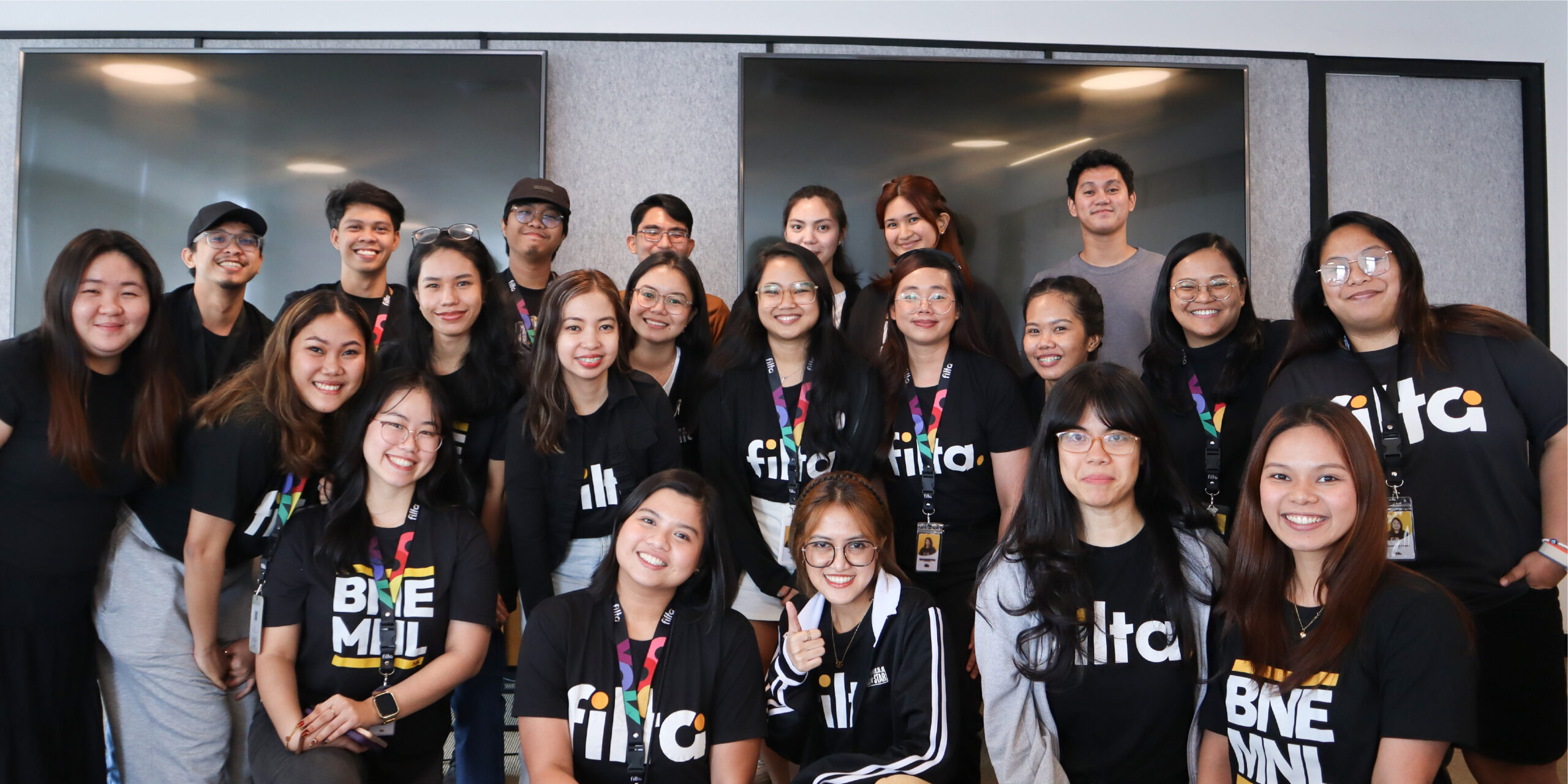
Filta is ranked in the top 9% of outsourcing providers globally. We help Jacksonville-based agencies source, hire, and compliantly employ dedicated remote professionals in the Philippines, handling talent acquisition, Employer of Record (EOR) compliance, equipment, and ongoing support under one roof.
Book a free strategy session → We will show you exactly how to hire the right remote talent in 3 to 5 weeks with the same quality you would expect from a 10-week local search.







 +61 (07) 45180033


