
 Let's Talk






Los Angeles is one of the most competitive advertising markets in the country. Digital ad spend in LA reached $7.2 billion in 2022 and has grown steadily since, with US digital ad spend projected to surpass $413 billion by 2026. The agencies operating in that environment are sophisticated, fast-moving, and deeply familiar with creative complexity.
And yet, when those same agencies hire offshore for the first time, they almost universally make the same set of mistakes.
Offshore hiring looks straightforward from the outside and reveals its nuances only after you are in it. The lessons below are the ones that come up most often in honest conversations with LA advertising teams that have been through their first offshore hire and are either doing it well now or wishing they had started differently.
1. The cost saving is real, but it is not the only number that matters
The cost difference is what usually starts the conversation. And it is genuinely significant.
Filta’s 2026 Salary Guide, which draws on real 2026 placement data, puts the true all-in cost of a senior graphic designer in the Philippines at $31,945 per year compared to $136,500 for an equivalent US hire. A social media manager in Colombia runs $43,426 all-in versus $123,500 locally. A performance marketing specialist in the Philippines is $24,795 versus $130,000 in the US. Every figure includes salary, Filta’s management fee, 13th-month pay, government contributions, and health insurance.
Those numbers are real, and they represent genuine margin recovery for an LA agency running on tight retainers.
What first-time offshore hirers consistently underestimate is the adjacent cost structure: the time required to manage a remote hire well, the onboarding investment in the first 90 days, the workflow documentation that needs to exist before the hire starts, and the management overhead of a timezone gap if the wrong market is chosen for the role.
None of these costs erase the savings. But they do reshape the math. The teams that get the most value from offshore hiring go in with realistic expectations about the full cost picture on both sides of the ledger, not just the salary comparison. The ones that go in expecting effortless savings are the ones who end up frustrated six months later.
2. The timezone decision is more consequential than it looks
Most LA advertising teams pick a market based on headline cost savings. They find out later that the timezone was the more important variable for the specific role they needed to fill.
The Philippines operates 15 to 16 hours ahead of Los Angeles Pacific Time. A Philippines-based hire working standard business hours in Manila is finishing their day around the time your LA team is waking up. For roles structured around async delivery – video editors, graphic designers, data analysts, copywriters working from detailed briefs – that time gap can actually work in your favor: you assign work at end of day and review finished output in the morning.
For roles that require real-time collaboration, that same gap creates friction that compounds daily. A media buyer who needs to respond to campaign performance during your business hours, an account coordinator who needs to be reachable when a client calls, a creative director’s assistant who needs to act on feedback as it happens, these roles do not suit a 15-hour offset regardless of how talented the individual is.
Colombia operates on UTC-5, which sits one hour ahead of Los Angeles during Pacific Daylight Time and two hours ahead during Pacific Standard Time. For an LA advertising team, a Colombia-based hire is working in a near-overlapping business day. Not perfect, but functional for most collaborative roles.
The first-time lesson: map the role’s collaboration requirements before you choose the market. The best hire in the wrong timezone is a structural problem no amount of good management can fully solve.
3. Quality is a process question, not a location question
The most common objection LA advertising teams have before their first offshore hire is about quality. Creative work, client-facing communication, campaign management, these feel like areas where proximity and shared cultural context matter. And there is some truth in that instinct. It just points to the wrong solution.
A 2024 report by 1&1 IONOS found that 65% of quality concerns in offshore partnerships were tied to poor onboarding and unclear KPIs, not location-based capability. When offshore work is not meeting quality standards, the cause is almost always traceable to a vague brief, an absent feedback loop, or an onboarding process that assumed the hire would absorb context they were never given.
McKinsey’s research on offshoring consistently shows that when clients closely integrate their domestic and offshore teams and invest in building shared skills, attrition drops and output improves substantially. The operative variable is always integration, not location.
That means a clear brief every time. A consistent feedback rhythm. Defined output standards. An onboarding process that transmits institutional knowledge deliberately rather than hoping it appears.
For LA advertising agencies specifically, this has one additional layer: creative quality standards need to be shown, not just described. Providing your offshore hire with a portfolio of work you consider excellent, style guides, brand voice documents, and examples of both strong and weak output in a given format calibrates their judgment in a way that a written brief alone cannot. The time it takes to build that reference library pays back across every piece of work they produce.
4. The employment structure is not an administrative detail
A surprising number of LA advertising agencies make their first offshore hire through an informal contractor arrangement. They find someone through LinkedIn or a referral, agree on a monthly rate, and pay them through an international transfer service. It feels simple. It carries real risk that does not surface until something goes wrong.
The US IRS can hold companies liable for unpaid payroll taxes and FICA penalties on workers misclassified as contractors when the working relationship functions like employment. Beyond the US-side exposure, local labor authorities in the Philippines and Colombia can reclassify contractor relationships as employment under their own laws, which can create retroactive liability for unpaid benefits, back taxes, and severance.
The practical fix is an Employer of Record arrangement: a structure where a provider legally employs your offshore hire in their home country, handling payroll, mandatory benefits, tax compliance, and the employment contract, while you retain full control of the day-to-day work. For a first-time offshore hire, this is not overcaution. It is the correct structure for any working relationship that functions like employment.
Do not treat the employment structure as a detail to sort out later. Get it right before the first day, because the cost of correcting an informal arrangement after the fact is considerably higher than setting it up properly from the start.
5. The first 90 days determine whether the hire works at all
LA advertising teams that have made multiple offshore hires say the same thing when asked what they would do differently the first time: they would take the onboarding more seriously.
Filta’s 90-Day Onboarding Checklist documents that offshore team members who go through a structured first 90 days are 58% more likely to still be with you three years later. Those who do not get that structure are typically gone within 12 months, at a replacement cost estimated between 50 and 200% of their annual salary.
For LA agencies, the first 90 days need to accomplish a few specific things that local onboarding often handles informally. Your offshore hire cannot absorb your agency’s culture, client context, or creative standards by proximity. Every piece of that context needs to be deliberately communicated: who your clients are, what you consider excellent work, how feedback works in your team, what the communication norms are, which decisions they can make independently and which require approval. This is not a one-day orientation. It is a 90-day process of deliberate integration.
The agencies that get strong long-term performance from offshore hires are the ones that treat the first 90 days as seriously as they treat the first 90 days of a new senior local team member. The logic is the same. The execution just requires more intentionality when proximity is removed.
What all five come down to
Read across these five lessons and the pattern is consistent: offshore hiring rewards preparation and punishes shortcuts.
The cost saving is real. The talent is there. The Philippines and Colombia have both built mature professional workforces with strong track records of delivering for US-based clients. What determines whether a first offshore hire goes well is almost entirely about the structure you put around it, the brief, the timezone match, the quality standards, the employment arrangement, and the first 90 days.
The LA agencies that hire offshore successfully are not doing anything exotic. They are applying the same rigor to an offshore hire that they would apply to their best local one. That is the lesson most teams have to learn the first time before they get it right.
How Filta helps LA agencies get it right from the start
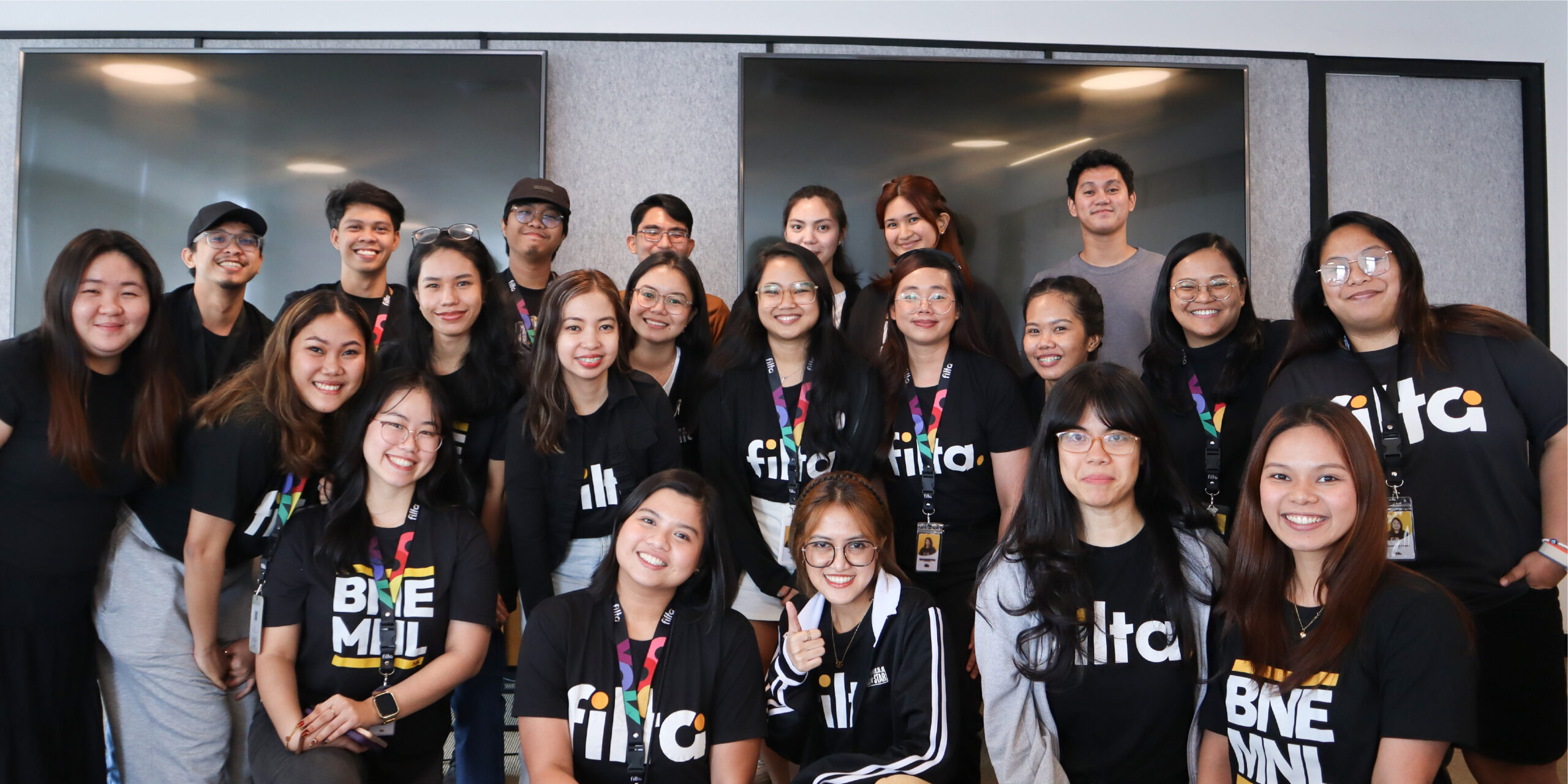
Filta works with LA-based advertising agencies through the full offshore hiring process, from brief to integration, with operations in both the Philippines and Colombia.
Their model is built around the five areas where first-time offshore hires typically go wrong. The sourcing process accounts for timezone requirements from the start. Vetting for advertising-specific roles includes practical assessments, not just interviews. Employment is structured through Filta’s Employer of Record service in-country, correctly from day one. And their onboarding support gives LA teams a structured 90-day integration framework rather than leaving the hire to find their own footing.
For LA agencies approaching their first offshore hire, the most useful first step is a conversation about the specific role, the collaboration requirements, and which market and structure fits. Filta’s team covers that in a single call, which is the point where most first-time mistakes get avoided.
Frequently Asked Questions (FAQs)
- Is offshore hiring right for a boutique LA advertising agency or only for larger operations?
Boutique agencies often benefit more, not less. The cost savings on a single well-placed offshore hire can represent a meaningful proportion of a small agency’s margin. The structure required – a clear brief, an EOR arrangement, and a 90-day onboarding process, scales down as well as it scales up. - Does the quality of creative work hold up with offshore hires in advertising roles?
When the briefing process is clear, output standards are shown through examples, and feedback loops are consistent, yes. Research consistently points to onboarding quality and brief clarity, not location, as the primary drivers of quality outcomes in offshore creative roles. - How do I choose between Colombia and the Philippines for an advertising role?
Map the role’s collaboration requirements first. If the role needs real-time availability during LA business hours, Colombia’s timezone overlap is stronger. If the role suits async delivery and batch review cycles, the Philippines offers deeper cost savings and a large creative talent pool. Many LA agencies use both markets for different role types within the same team. - What is an Employer of Record and why does it matter for a first offshore hire?
An EOR is a company that legally employs your offshore hire in their home country on your behalf, covering payroll, taxes, mandatory benefits, and the employment contract. It is the correct legal structure for any working relationship that functions like employment, and it protects both your agency and your hire from the compliance exposure that informal contractor arrangements carry. - How long does it take to make an offshore hire through Filta?
Filta’s typical timeline from brief to operational hire is four to six weeks, including sourcing, vetting, interviews, contract setup, and onboarding preparation. - What is the most common reason first offshore hires do not work out for LA agencies?
Poor onboarding and unclear output expectations are cited most consistently. The hire is capable. The brief was vague, the integration was rushed, and the quality standards were assumed rather than shown. Fixing those three things before the hire starts resolves the majority of first-hire failure modes.
Filta is ranked in the top 9% of outsourcing providers globally. We help LA advertising agencies make their first offshore hire correctly, and build from there, covering talent sourcing, Employer of Record (EOR) compliance, equipment, onboarding support, and ongoing HR in the Philippines and Colombia.
Book a free strategy session → We will show you exactly how to hire expert offshore talent in 3 to 5 weeks with the same quality you would expect from a 10-week local search.







 +61 (07) 45180033


