

 Let's Talk







When we started building teams in Colombia, we thought about nearshoring much like everyone else: finding the right people, matching them to the right roles, and getting them started quickly.
But working closely with clients and professionals in Bogotá and Medellín changed how we looked at the process.
We saw that the biggest differences between successful and unsuccessful nearshore hires often had little to do with finding talent. They showed up after the person joined.
The companies that built strong, long-term Colombian teams were not simply the ones that made good hires. They were the ones that stayed involved after the offer was signed: setting clear expectations, checking in regularly, talking about growth, and addressing compensation before it became a reason to leave.
That changed how we approach nearshore hiring.
We stopped thinking about placement as the finish line and started treating it as the beginning of a longer relationship.
The 12-Month Ramp Matters
One reason this shift matters is that new hires often need much longer to reach their full performance potential than companies expect.
Gallup’s research on onboarding points to a ramp of around 12 months, while only 12% of US employees strongly agree that their organization does a great job of onboarding.
That creates a problem for nearshore teams.
A company may expect a new hire to be fully settled by day 90, even though they are still learning the role, the systems, the team, and how decisions get made.
In an office, some of that learning happens informally. Someone asks a quick question, overhears a conversation, or gets help between meetings.
For a remote nearshore hire, those moments have to be created deliberately.
If they are not, a normal learning curve can start looking like a performance problem.
Distance Makes Communication More Important
Working across countries adds another layer to the relationship.
A manager cannot rely on hallway conversations, spontaneous check-ins, or simply noticing when someone seems uncertain. Expectations, feedback, recognition, and support need to be more intentional.
This is one of the biggest lessons Colombia gave us.
The strongest client relationships were not built around the idea of simply placing a talented Colombian professional into a role. They were built around creating a working relationship that continued to develop after the hire started.
That means making space for questions early, giving useful feedback, and making sure employees understand where their role can go next.
Retention Starts Before Someone Resigns
Filta’s 2026 Salary Guide highlights a pattern we have seen in practice: attrition on offshore and nearshore teams can become a concern around the 18-month mark.
By then, the warning signs may have been visible for months.
A salary review never happened. Career progression was unclear. Check-ins became purely task-focused. The employee stopped hearing about what their future with the company could look like.
The problem is not necessarily the hire.
Sometimes, the company simply stopped investing in the relationship after the initial onboarding period.
That is why retention conversations should happen before they become retention problems.
Put the Conversations on the Calendar
The fix does not need to be complicated. It needs to be consistent.
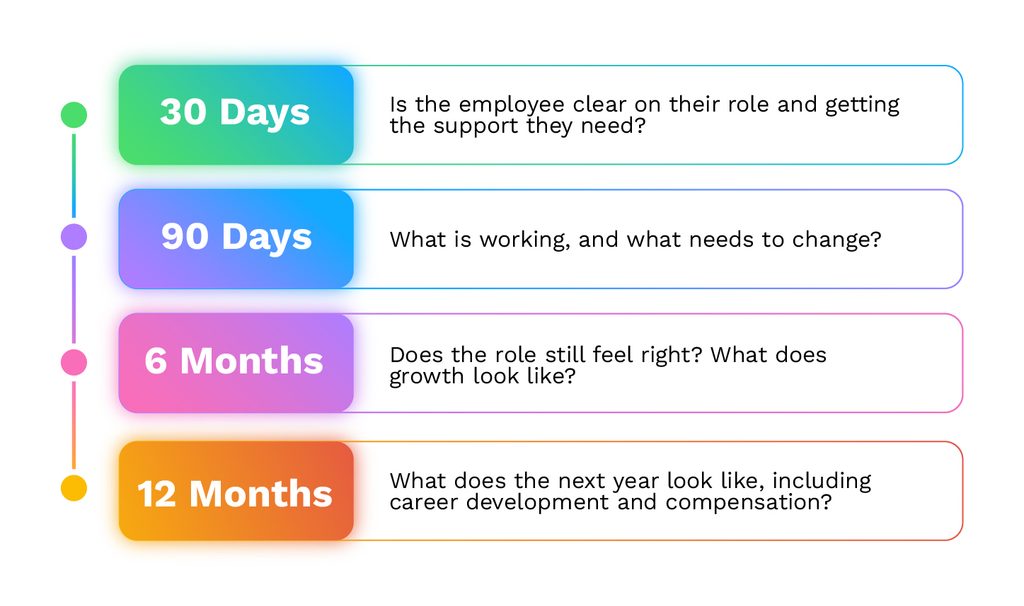
Filta’s 90-day Onboarding Checklist provides a practical framework for managing the earliest stage of that process.
The important part is making these conversations routine. A check-in that only happens when something goes wrong is not really a check-in. It is damage control.
What Colombia Changed for Us
Colombia did not teach us that Colombian professionals are talented. We knew that before we entered the market.
It taught us to look differently at what happens after the hire.
Working with businesses and professionals in Bogotá and Medellín showed us that nearshore hiring works best when the relationship does not become transactional once the offer is signed.
That changed our approach.
We now see onboarding, regular feedback, career conversations, and proactive retention as part of the hiring process itself, rather than activities that happen after hiring is complete.
And the lesson extends beyond Colombia.
Whether a team member is working from Bogotá, Manila, London, or another part of the world, a successful hire needs more than a good job description and a signed offer. They need clarity, support, opportunities to grow, and a reason to see themselves staying.
We Build for the Long Term
At Filta, our approach to nearshore hiring reflects what we have learned from working in the Colombian market: placement is only the beginning.
The real work continues through onboarding, regular check-ins, career conversations, and the decisions that make people want to stay.
If you are considering building a nearshore team and want to talk through what that process could look like, book a free strategy session with Filta.
Filta is a globally recognized outsourcing & EOR partner, established in 2016 and headquartered in Australia, helping businesses across the US, UK, Canada, New Zealand, and Australia build dedicated offshore teams in the Philippines and Colombia.







 +617 4518 0033
